Roomsie: From Failed Builds to Revenue in 8 Months
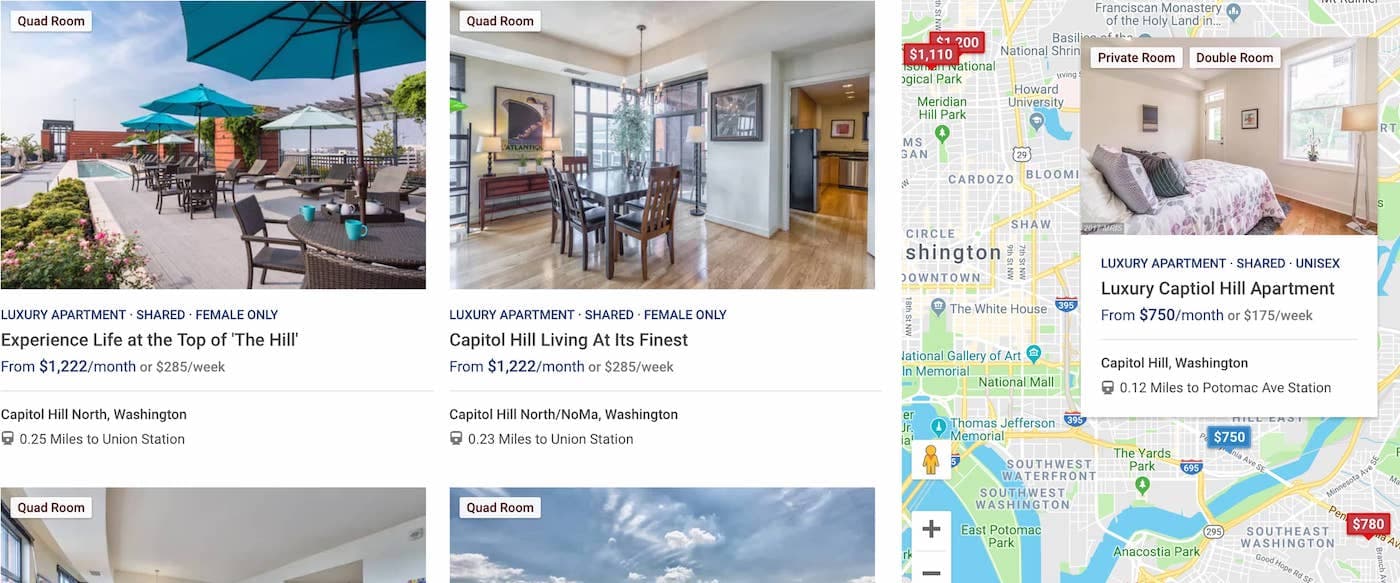
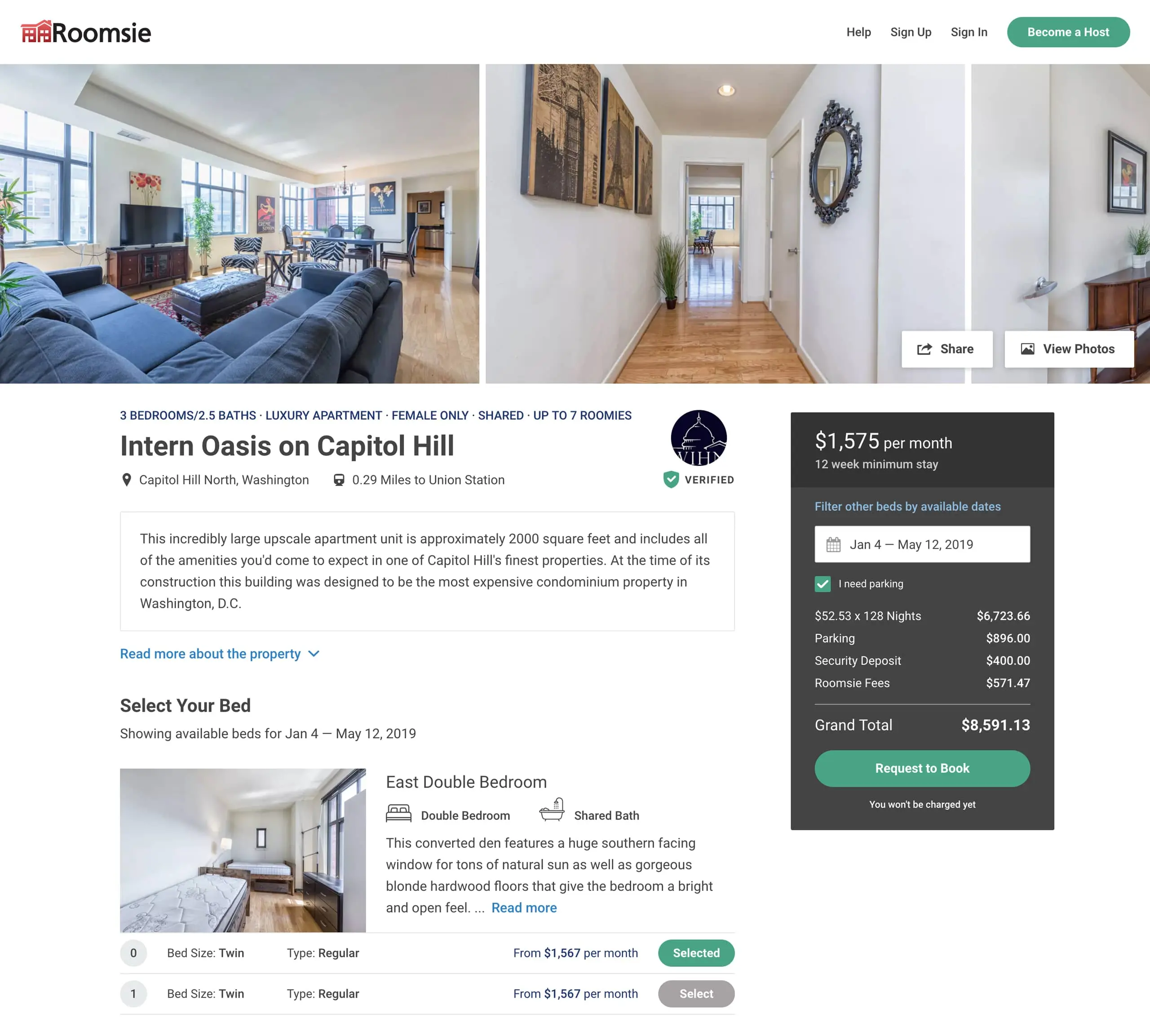
Roomsie is a housing marketplace for interns and students in Washington, D.C. After multiple development teams failed to deliver, we took over, rewrote the application from scratch, and launched a revenue-generating product in 8 months.
First contact
In late 2017, we were approached by Jacob Chaney, Roomsie's CEO. He had a problem that was becoming painfully familiar to startup founders: years of development, multiple teams, and still no working product.
Jacob runs a thriving local business that helps interns find housing in Washington, D.C. — which made him the ideal founder for a company looking to solve that same problem at scale through technology. But the execution had stalled. The current design and development team, sourced through an expensive talent agency, was struggling. Progress was slow, features were buggy and unpolished, and the project burn rate was unsustainably high.
Jacob needed someone to take ownership of the development process and ensure features were properly built, tested, and delivered on time.
Identifying the problems
We spent the first ten days inspecting the codebase and observing the development process. We spoke with all team members — together and individually — to understand their perspectives and identify the underlying sources of the problems.
We found several issues:
- Lack of technical expertise among some team members
- An overly complex management process led by people without project management experience — on a project that didn't need complexity
- Multiple developers working on the same features, stepping on each other's toes
- No feature ownership and no accountability for missed deadlines
We wrote a detailed report, shared our findings with Jacob, and brought in an established D.C.-based technical consultant for a second opinion on the state of the project. Within a week, we downsized the team from 5 contractors to 2.
Starting fresh
Since the existing codebase was riddled with bugs and very little of the application actually worked, we recommended a complete rewrite. It was a difficult decision for a project that had already consumed significant budget, but it turned out to be the right one.
In the following months, we delivered more working features than the previous teams had built over the preceding two years. We used Ruby on Rails on the back-end paired with React on the front-end — a stack that let us move fast without sacrificing code quality.
We held daily stand-up meetings to keep everyone informed. Jacob gave us invaluable insight into the housing industry's nuances, while we guided him through technical trade-offs and made sure he understood the implications of each product decision.
After several months of focused work, we were ready to soft-launch the first version of Roomsie and begin testing with real users.
Validating product-market fit
Before going live, we implemented Mixpanel and Hotjar analytics to understand exactly how people used the product. We listed an initial batch of properties and ran small-scale marketing to attract early users.
The results came faster than expected. Within days, we received our first booking request — and it converted. Within weeks, Roomsie was generating real revenue.
We spent significant time talking with early users to gather feedback and identify friction points. We embraced a data-driven approach: every new feature and UX change was informed by actual usage patterns and conversion data.
Technical highlights
Two-sided marketplace architecture: Roomsie connects hosts with renters, which means separate workflows, dashboards, and permission models for each user type — plus an admin layer for the Roomsie team.
Search and filtering: Property search needed to handle geographic queries, date range availability, price filtering, and amenity matching — all with fast response times to keep the browsing experience smooth.
Payment processing: Medium-term housing transactions involve larger sums and more complex payment flows than typical short-term rental bookings. We built a reliable payment system with proper escrow logic, automated payouts, and dispute handling.
Messaging system: Real-time communication between hosts and renters was critical for closing bookings. We built an in-app messaging system that kept conversations organized and accessible.
The outcome
Roomsie launched as a working, revenue-generating product — a dramatic turnaround from where it stood when we joined. The 8-month timeline from rewrite to launch validated our approach: a small, focused team with clear ownership outperforms a larger, fragmented one.
Building Roomsie with Jacob was one of our most rewarding engagements. It was a case where the client's deep domain expertise and our technical capabilities aligned perfectly, allowing us to deliver genuine value at every stage of the project.
Next project
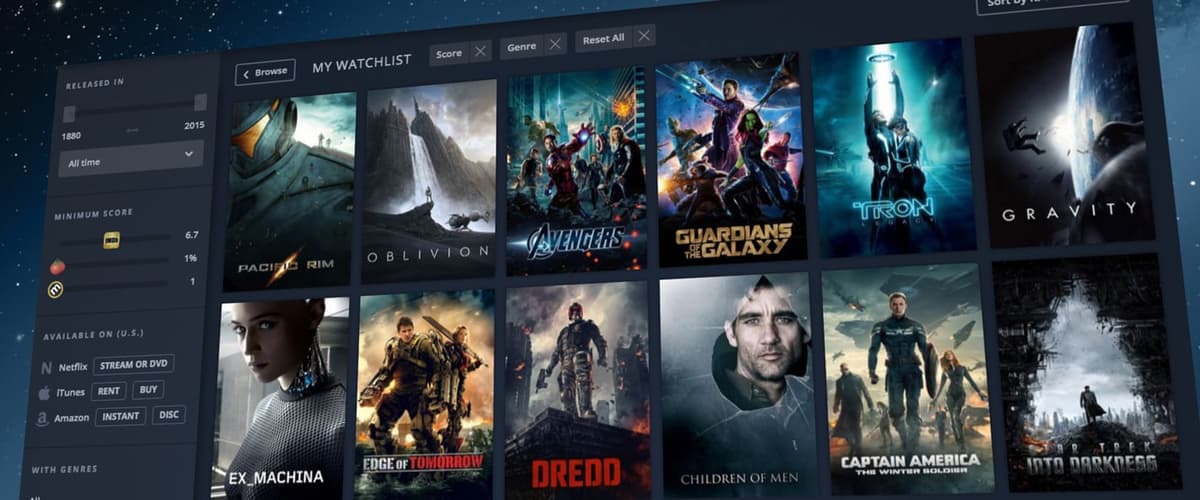
Movieo: A Movie Discovery App Reaching 100,000 Monthly Visitors
Movieo is our in-house side project — a movie discovery app that ranks 250,000+ films using a combined IMDb, Rotten Tomatoes, and Metacritic score. It now serves 100,000 monthly visitors with zero marketing spend.
See project